
Finding Trumbull Residents
There is no official public list of every person who lives in Trumbull. A useful search is a chain of narrower records. Vision may identify an owner of record and a parcel number. The Secretary of the State voter lookup may return registration or polling information, but it can hide an address and is not a street-wide roster. The Town Clerk and Connecticut Judicial Branch keep different kinds of records, and neither should be treated as a complete household list.
Choose the first source by the question. An address points toward Vision, Trumbull GIS, permits, and deeds. A name with a public role may lead to a town archive, business filing, or license. A family-history question usually needs directories, churches, cemeteries, vital records, probate, and census material. The strongest result has a second identifier, such as a PID, MBLU, docket, case number, or dated address.
- Search Vision Government Solutions by address, owner name, ACT number, MBLU, or PID, and save the parcel identifiers.
- Use the Connecticut voter lookup only for the permitted registration or polling question, allowing for privacy suppression and spelling differences.
- Check the Connecticut Judicial Branch civil index or the Probate District 46 lookup when the search concerns a public case trail.
- For an older household, compare a dated telephone directory, church or cemetery source, deed, probate record, or census entry rather than treating one old listing as current.
- If the needed record is not online, ask the custodian for the counter, phone, mail, in-person, library, archive, or Freedom of Information route that applies.
For an address-first search, the detailed street-by-street sequence is in the Trumbull street records directory. A name-first search that needs identity checks belongs with the separate resident lookup, where court, vital, business, and license fields can be compared.
Trumbull Records Offices
Trumbull is in Fairfield County, but Connecticut has no current county government or county clerk for ordinary land, vital, or voter files. County is a geographic label here. The operating record chain runs through the Town Clerk, town departments, state agencies, the Judicial Branch, and public research repositories. That distinction prevents a search from being sent to a county office that no longer holds the file.
Trumbull Town Clerk
Town Hall, 5866 Main Street
Trumbull, CT 06611
203-452-5037
Town Clerk records and requests
Assessor and Vision
Municipal parcel and valuation records
Trumbull, CT
203-452-5016
Vision property search
Connecticut Elections
State voter lookup and privacy program
Statewide service for Trumbull
Official online route
Voter information and privacy
The Clerk is the local route for certified birth, death, and marriage copies, land-record indexes, maps, trade names, elections, and town-held records. The office is open to title searchers, but a plot plan may be held elsewhere, and the Building Department may retain major-addition or deck records. For a public-agency record not exposed online, Connecticut's Freedom of Information Act provides an inspection or copy route subject to exemptions and redactions.
Trumbull residents also use the Trumbull Public Library at 33 Quality Street, the Fairchild Nichols branch at 1718 Huntington Turnpike, and the Historical Society research library at 1856 Huntington Turnpike. The library's local-history collection is non-circulating and Ancestry Library Edition is available inside the library. Historical Society research is by appointment.
The Town Clerk records page is the best starting point for local routing:
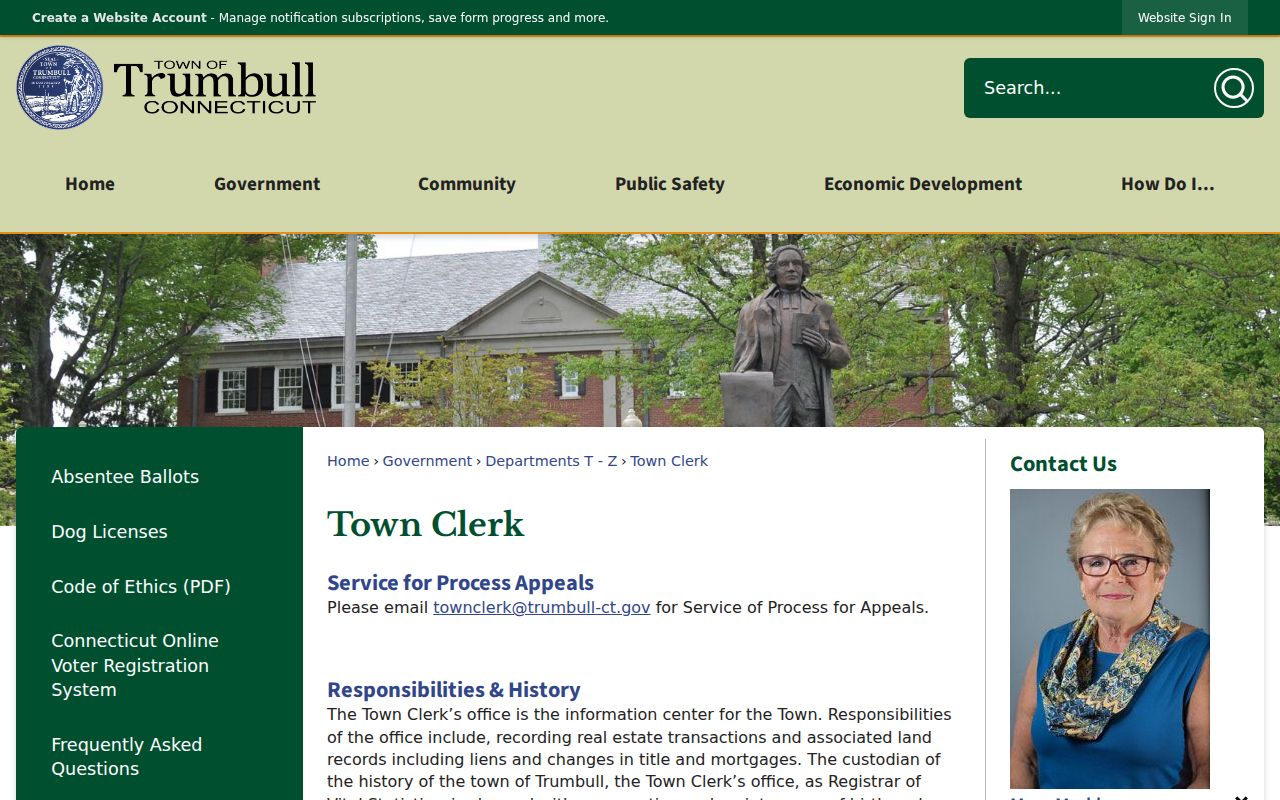
The page points to the office that creates or certifies the record. It also keeps a town record separate from a state lookup, a court index, or a private compilation.
Trumbull Property Search Fields
Vision Government Solutions is the clearest public address-to-owner starting point in Trumbull. Its card separates the parcel location from the owner-of-record and mailing line. Search modes include Address, ACT NUMBER, MBLU, and PID, with help text also describing owner-name searches. A Street Listing tab supports a street view, and Sales Search is a separate mode. No visible search control was marked required, but a narrow query is easier to verify.
| Field | Type | How Trumbull Uses It |
|---|---|---|
| Address | Text | Find a municipal location or street listing. |
| Owner Name | Text | Find an owner-of-record lead, not an occupant. |
| PID / ACT NUMBER | Text | Carry a stable parcel or account key to follow-up records. |
| MBLU | Map fields | Map, Map Cut, B, Bc, Lot, Unit, and Uc portions. |
| Street Listing / Sales Search | Tabs | Browse address records or focus on sales history. |
The captured Town Hall card shows why field names matter. It uses PID 12713, MBLU E/07 / 00174/ 000/, account number 00769700, Fire District L, owner “TRUMBULL TOWN OF,” and a Book & Page pointer of 0109/0001 for a July 2, 1956 sale. The card reports a 2025 total assessment of $4,696,790 and a 2025 appraisal of $6,709,700. Those are assessment fields, not a title opinion or proof of residence.
The assessor home screen also carries the 2026 revaluation notice. Save the valuation year when comparing cards, because a 2021 revaluation and the current 2026 process make a year-less value misleading.
The public assessor route is visible here:
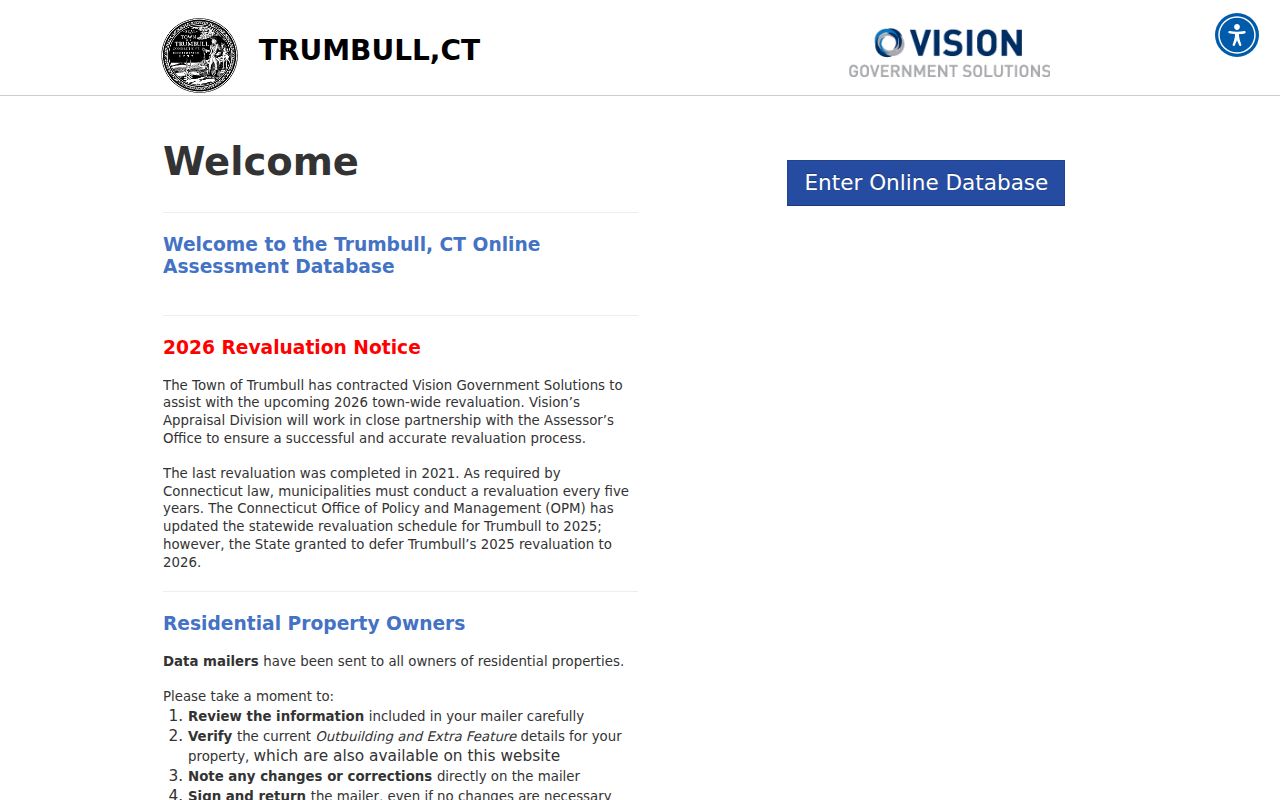
Use the PID, MBLU, ACT number, and dated card as the bridge to GIS, the Town Clerk, permits, or a later resident lookup.
Trumbull Voter Roll Rules
The Secretary of the State lookup asks for a town, last name, first name, and date of birth. For Trumbull, select the town before judging a result. The observed research session was stopped by a security layer, so no named match or live polling result is claimed. A no-match response can reflect spelling, timing, nonregistration, or privacy protection.
Connecticut's centralized voter system includes registration and election participation concepts, but public release is narrower. The public detail described by the state limits birth-date information to the year. Residential addresses can be suppressed through voter privacy protections or Safe at Home. A full statewide file has a $300 fee and the request form limits use to election-related, scholarly, journalistic, political, or governmental purposes.
Voter data is therefore a confirmation step, not a substitute for property, deed, or vital records. Town updates occur on the state's stated cycle. Keep the lookup date, selected town, spelling, and any privacy or no-match note with the result.
The state lookup is the right source for registration and polling questions:
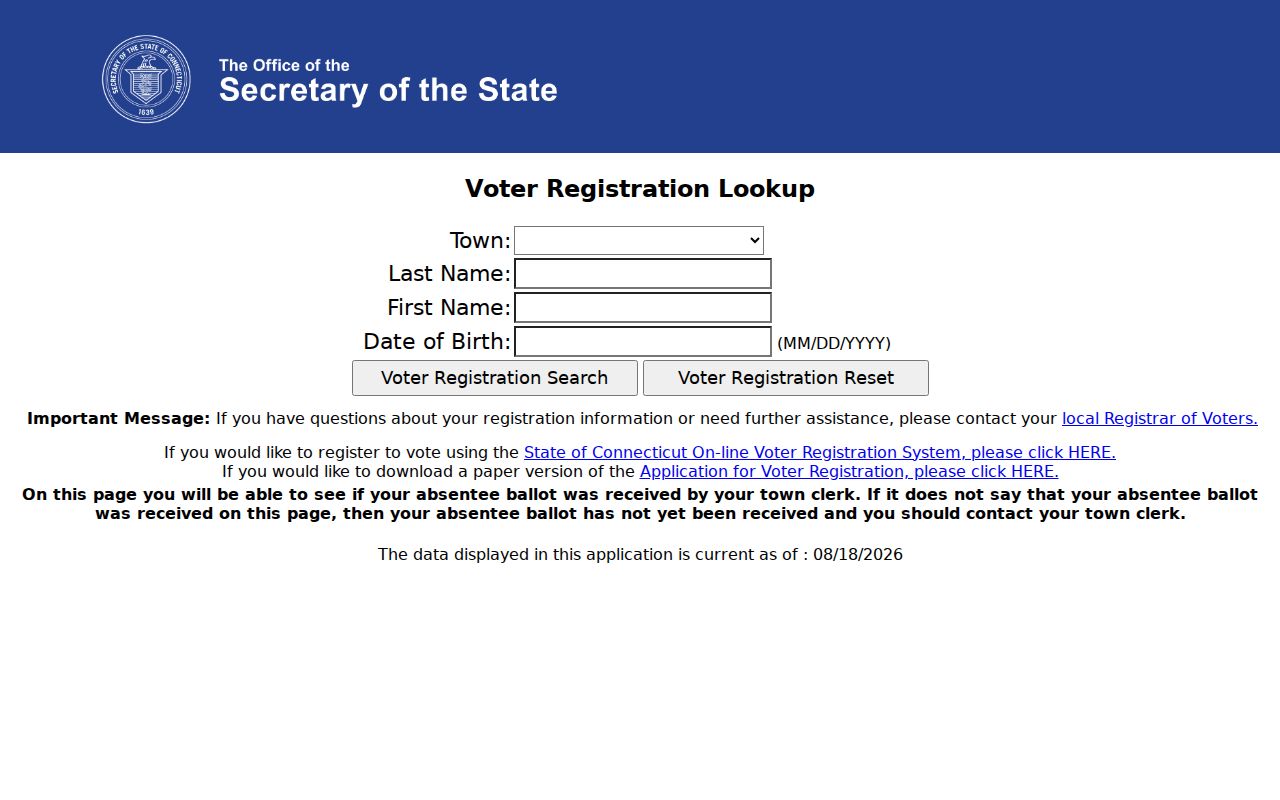
The capture shows the official route, while the privacy page explains why a public search may not display a residential address.
Trumbull Records by Source
Current resident information is split by record purpose. A property card answers who the municipality records as owner. A court index answers whether a public case entry matches a name and category. A business or license file may connect a person to a public role. None of these sources, alone, is a current household directory.
| Source | What It Can Show | Keeper | Access |
|---|---|---|---|
| Vision parcel card | Situs, owner field, mailing line, PID, values, sale pointer | Trumbull Assessor | Public web search |
| GIS and ArcGIS layers | Parcel lines, building points, districts, imagery | Trumbull / MetroCOG | Public viewer and REST service |
| Voter lookup | Registration or polling information when returned | Secretary of the State | Name, town, DOB; privacy rules |
| Town Clerk records | Deed parties, vital copies, maps, trade names, FOI routing | Trumbull Town Clerk | Portal, counter, phone, mail, or request |
| Business and license files | Entity roles, credential status, public address fields | SOTS / DCP | Official state lookups |
Commercial people-finder products are a different category. They may combine old address files, marketing data, and public records without a clear source chain. The official route is slower, but a Vision PID, a docket number, a Business ID, or a credential number gives a reader something concrete to verify.
| Record language | Meaning in a Trumbull search |
|---|---|
| Roll | A list kept for a defined purpose, such as assessment or voter registration. |
| Index | A pointer to a record, not always the full image or certified copy. |
| Parcel | A mapped property unit with identifiers, boundaries, and assessment fields. |
| Criss-cross directory | An address, phone, or neighborhood arrangement that may point to a historical subscriber. |
Trumbull Court and Probate Trails
Connecticut's Judicial Branch provides the civil party search for civil, family, and small-claims categories. The party screen marks last name as required and offers first name, location, case category, case type, sort order, and Starts With, Contains, Is Equal To, and Sounds Like choices. Results can show a case name, case type, docket number, file date, court location, last action, disposition, party category, attorney or self-represented status, filings, and scheduled events.
Criminal and motor-vehicle dockets are separate. Their defendant search uses surname, first initial, birth year, a plus-or-minus year range, court location, and category. A pending entry is not a conviction. Probate is separate again: the public case index covers decedent estates and trusts from January 5, 2011 to the present and includes Probate District 46 for Trumbull. Historical estates may be filed under Stratford or Bridgeport because the district sequence changed over time.
The civil inquiry screen is useful for learning the fields before running a name search:
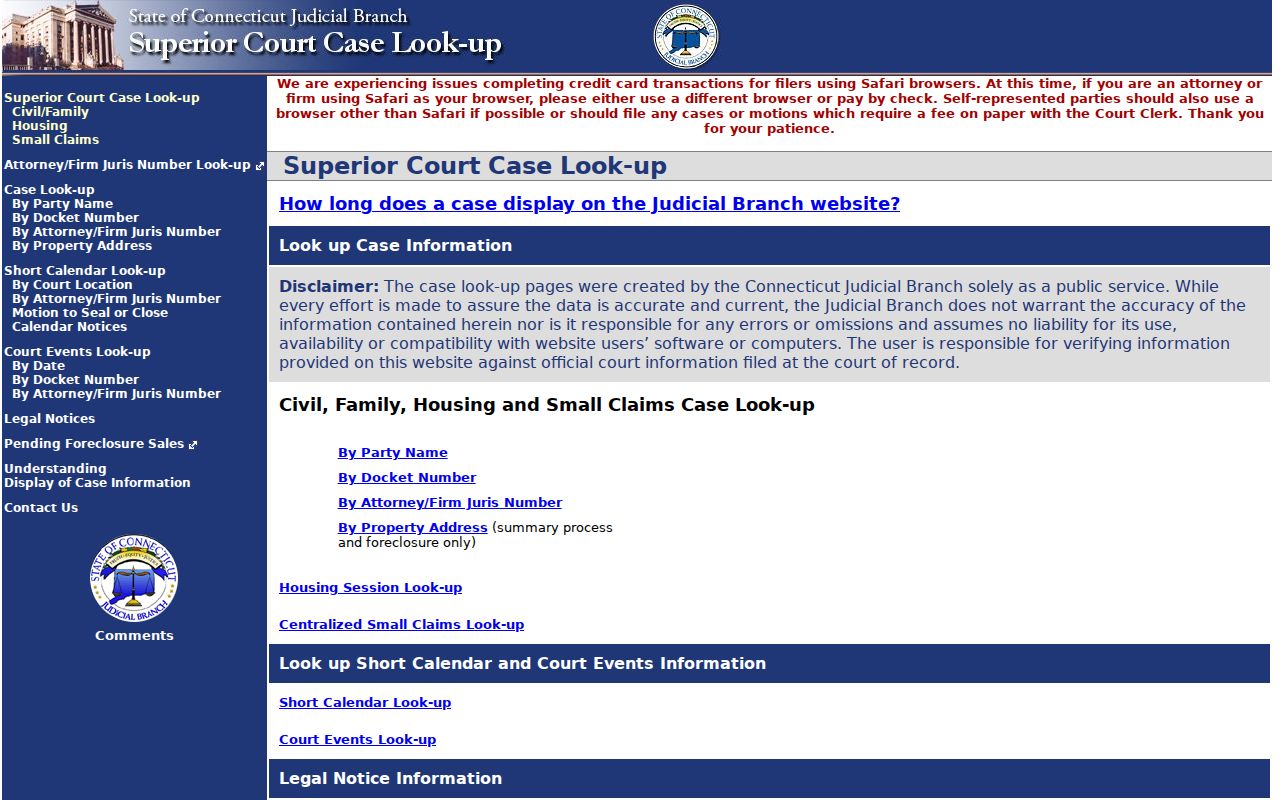
Keep the docket, court, party role, and date together. The public index is not automatically the complete court file, and sealed, juvenile, VAWA-protected, or otherwise restricted material is not assumed visible.
Probate's district filter is a separate route for an estate or trust:
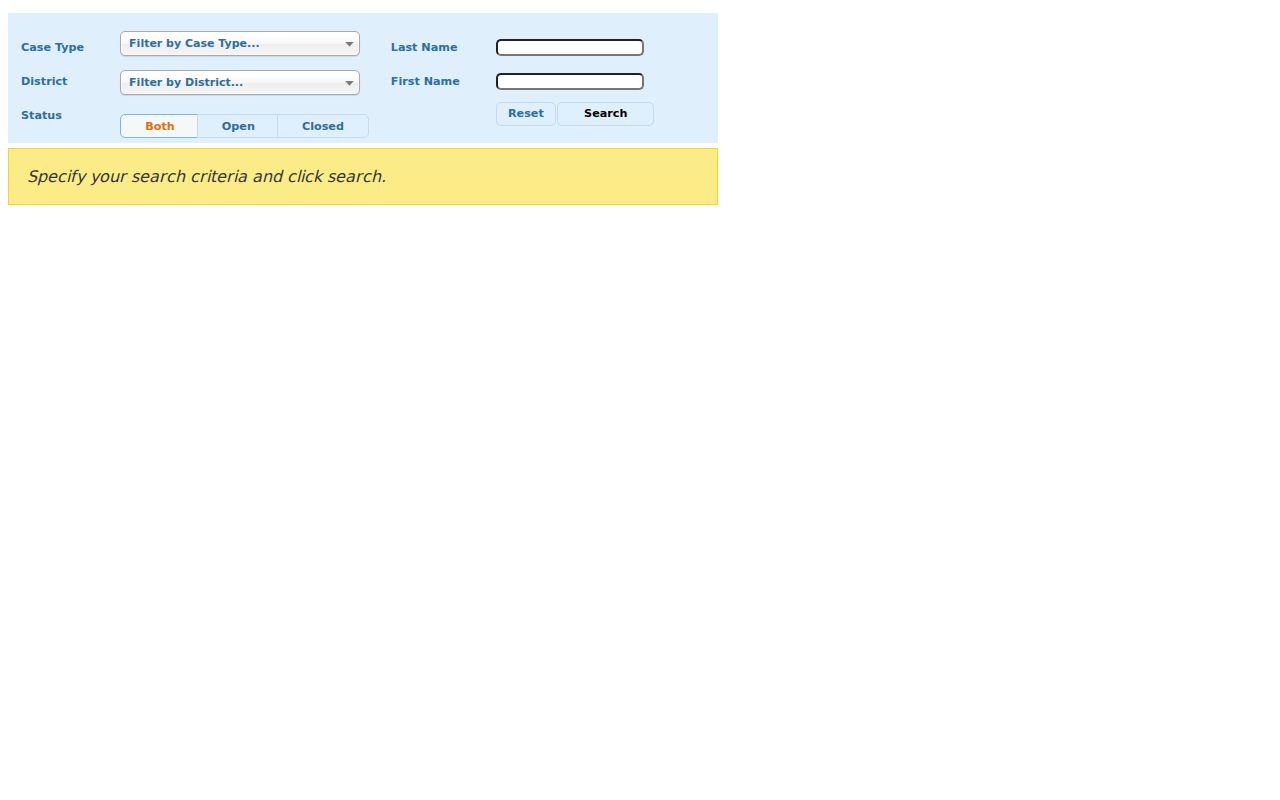
A case number and district give the clerk a precise follow-up request, while a name alone can join unrelated families.
Trumbull Vital Record Routes
Birth, death, and marriage records route through the Trumbull Town Clerk and Connecticut Department of Public Health. DPH describes a statewide registry from July 1, 1897 to the present, while the State Library guide supplies older Trumbull runs and church context. Divorce decrees come from the Superior Court that granted the divorce, not DPH. Adoption, parentage, and surrogacy records have special rules.
Birth copies younger than 100 years are restricted to listed people and authorized categories. A 100-year-old or older birth is public under the stated genealogical rule. Adults may generally request a death record, but Social Security information and veteran-copy exceptions remain protected. Adults may request ordinary marriage information, with Social Security numbers protected. Town and state fees, identification, relationship proof, and approved order routes vary, so use the current form.
The state hub gathers the local and statewide ordering paths:
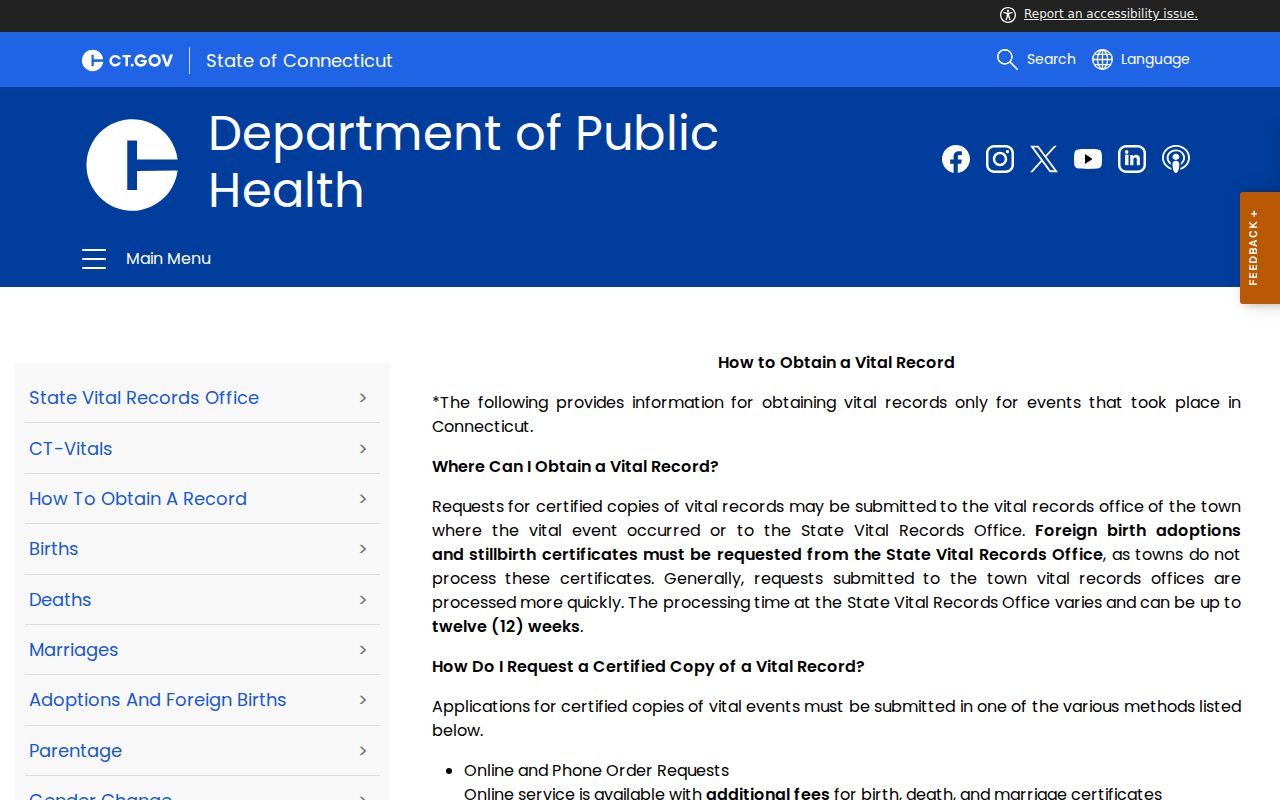
The hub connects an event in Trumbull to the right custodian and keeps an ordinary name search separate from an eligible certified-copy request.
Trumbull Public-Safety Record Boundaries
Connecticut has no Fairfield County jail roster. A local incident or accident report goes to Trumbull Police Records at 158 Edison Road, with release delays, fees, redactions, and investigation limits. State custody information belongs to the Department of Correction, while the Department of Emergency Services and Public Protection maintains a separate sex-offender registry. These are not interchangeable sources.
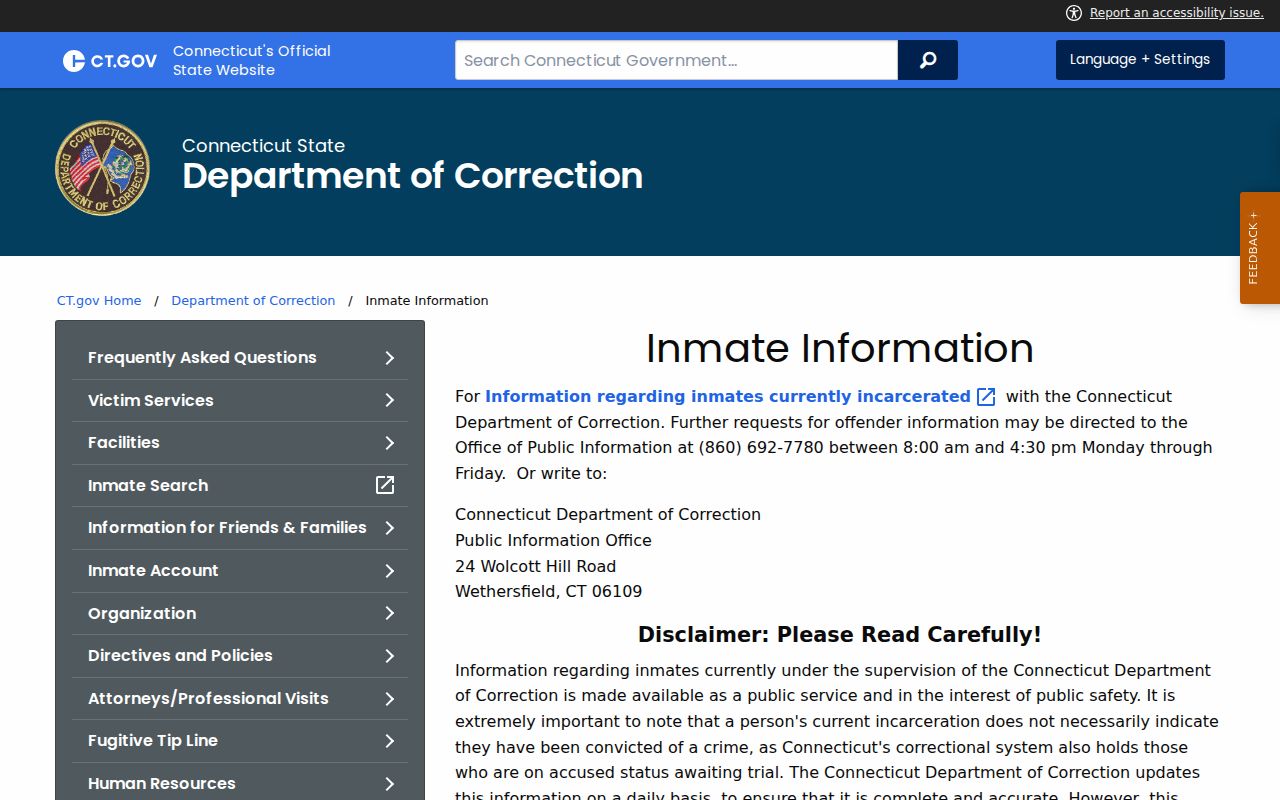
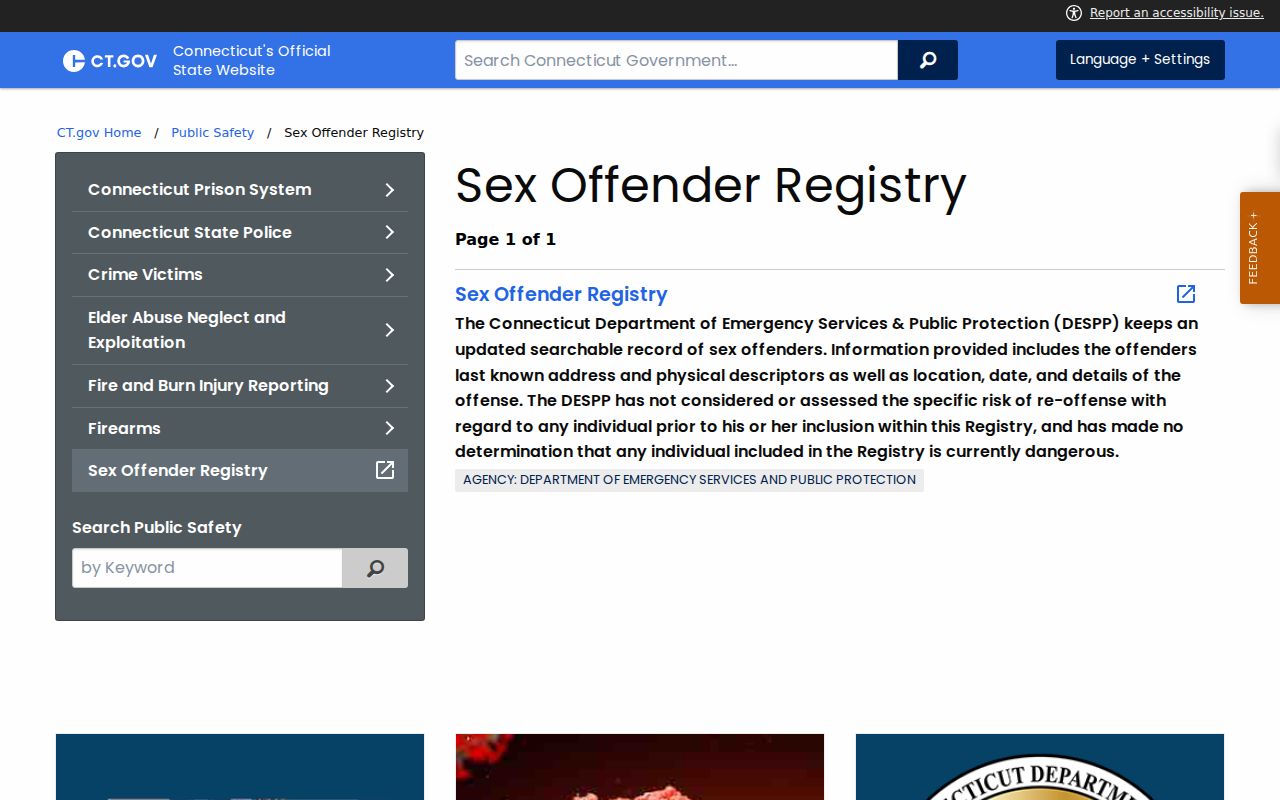
The DOC lookup is updated daily and has stated exclusions. The federal Bureau of Prisons locator covers federal inmates incarcerated from 1982 forward. The DESPP registry warns that its public data does not make a risk or dangerousness assessment. Preserve the source, date, custody status, and record warning instead of turning a hit into a conclusion about a person.
The Connecticut DOC page explains the state route:
The registry is a separate public record with its own statutory fields and warnings:
For a local report, start with the Trumbull custodian. For a state record, use the state system and its stated limits.
Trumbull Privacy and Protected Addresses
Public availability does not erase safety protections. Connecticut's Safe at Home program gives eligible participants a substitute mailing address, and voter privacy can suppress a residential address. C.G.S. §1-217 permits listed public-safety and public officials to request residential-address nondisclosure in public-agency records. Under-100 birth records, adoption files, protected Social Security fields, sealed cases, juvenile matters, VAWA-protected cases, and authorized probate documents have additional limits.
A no-match or missing address is not proof that a person is absent. It may reflect a privacy program, an administrative update, a spelling difference, or a record that never belonged in that system. When a record is wrong, contact the office that created it. A commercial opt-out cannot erase a correctly recorded deed, court index, or vital event.
Safe at Home is the state route for qualifying safety-risk participants:
Respect a substitute address or redaction, and never use another source to defeat it.
Lawful use. Trumbull records are useful for personal, lawful research, genealogy, civic questions, and family reconnection. Do not use a public record to stalk, harass, intimidate, or harm another person.
Trumbull Requests Beyond Portals
When a search stops at a login screen or a missing result, use the custodian's fallback chain. The Town Clerk accepts office, phone, mail, and request routes for records within its duties. The Municipal Search system uses an online workflow or PDF for permit records. Current requests generally cover post-2013 material, while street cards before December 31, 2013 are a separate alphabetical source. The library and Historical Society supply in-person research access for historical material.
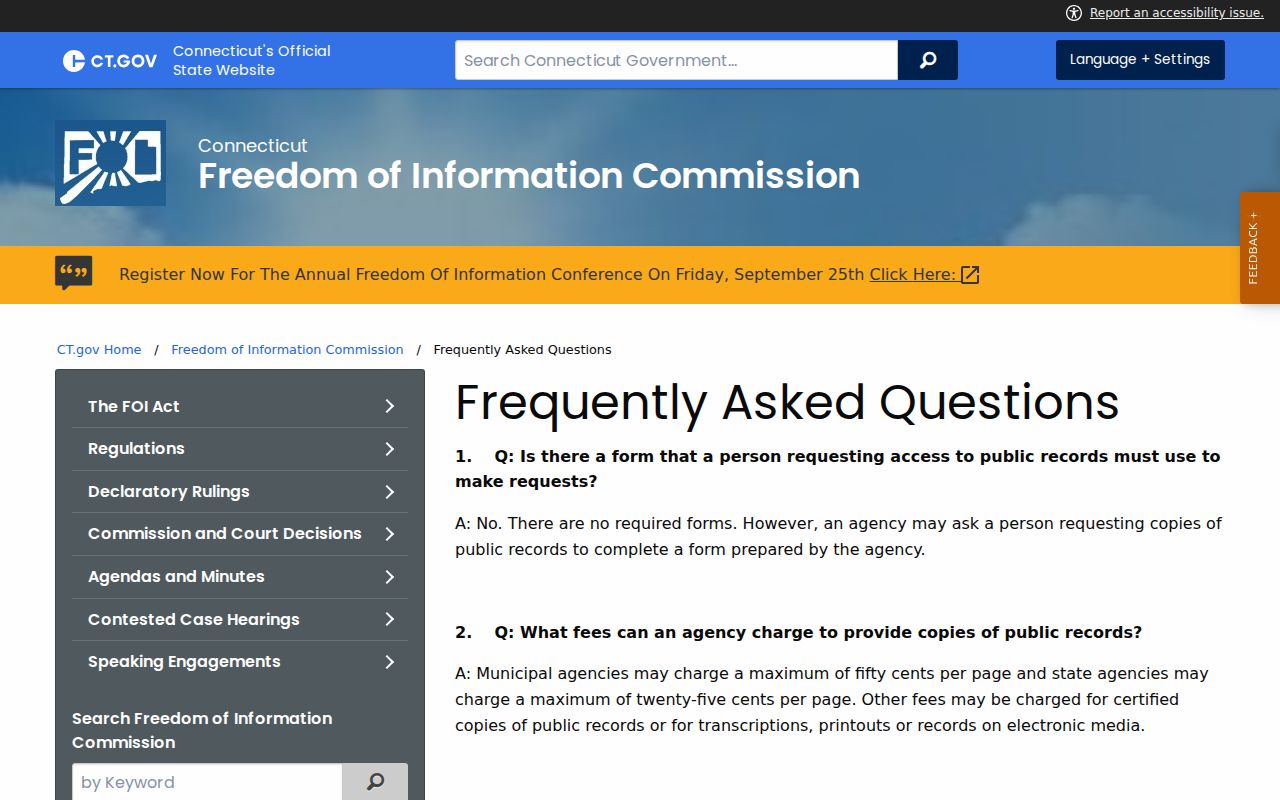
Connecticut's Freedom of Information Act, including C.G.S. §§1-200, 1-210, 1-212, and 1-217, covers existing public-agency records subject to exemptions. A request should name the record, date range, preferred format, and contact information. FOIC guidance says no universal form is required and describes prompt access, copying charges, and an appeal route. Ask for redactions rather than private identifiers.
The FOIC guidance is a useful check on a town request:
That fallback preserves a record of what was requested, what was withheld, and which custodian answered.
Trumbull Historical Directories
For earlier residents, the strongest confirmed directory set is the Southern New England Telephone Company material digitized by the Library of Congress. Runs include a 1930 Bridgeport District book, 1933 to 1935, 1940 to 1942, 1943 to 1945 classified material, 1955, 1956, and 1961/62. The books can show a listed name, street address, exchange, occupation, business classification, additional listing, or residence mark. They cover subscribers and listed numbers, not every household.
Trumbull Public Library holds a non-circulating local-history collection, but its official page does not publish an exact city-directory shelf list or confirm a reverse-directory run. Ask the Information Desk for “reverse city directory,” “criss-cross,” “address directory,” and a year. Pair a dated listing with the deed chain, a church or cemetery source, probate, or a federal census through 1950. A directory entry is historical evidence, never a current address assertion.
The full collection story, including how to read an entry and trace a household, belongs in the Trumbull city directory archive.
Trumbull Records in Motion
Current initiatives make dates especially important. The 2026 revaluation follows a 2021 last revaluation after a permitted deferral. A July 2026 First Selectman newsletter discusses the former Digital Realty data-center property at 80 Merritt Boulevard, consultant and owner meetings, and a future public-information document. These are public-project leads, not proof of a private person's location or a final land-use result.
The Town archive can be searched by keyword, archive category, time period, and date range. Building Department monthly permit reports, Town Clerk newsletters, and First Selectman media releases can explain why a name, parcel, or project appears in a public record. Save the item title, date, URL, and attachment rather than relying on a search snippet.
For a broader history, Trumbull's 1797 incorporation from Stratford, the probate move from Stratford to Bridgeport and then Probate District 46, and the end of Connecticut county government in 1960 explain why older records may use North Stratford, Bridgeport, or Fairfield County labels. Those labels are research clues, not a reason to merge unlike records.