
Trumbull City Directory Runs
The phrase city directory can suggest a town-only book, but the confirmed Trumbull material is mainly regional telephone coverage. Library of Congress scans preserve white pages, yellow pages, classified material, locality indexes, and later calling-area context. The Trumbull Library has a non-circulating local-history collection, yet its official page does not publish an exact year-by-year shelf list. The table separates a located run from a collection that still needs a catalog question.
| Collection | Years | Where Held | Access |
|---|---|---|---|
| Bridgeport District white/yellow pages | June 1930 | Library of Congress | Scanned pages, OCR, locality index |
| Bridgeport, Fairfield, Trumbull run | March 1933 to June 1935 | Library of Congress | Digitized regional directory |
| Bridgeport/Fairfield/Trumbull | October 1940 to July 1942 | Library of Congress | Subscriber, classified, and additional listings |
| Classified regional material | July 1943 to August 1945 | Library of Congress | Scanned business categories |
| Bridgeport/Trumbull | May 1955 and 1956 | Library of Congress | Subscriber, exchange, address, and business clues |
| Bridgeport-Stratford-Trumbull | 1961/62 | Library of Congress | Calling-area map and subscriber/classified pages |
| Local-history collection | Years not enumerated | Trumbull Public Library | Non-circulating inspection and copying |
These years do not establish a first or last printed Trumbull book. They are the verified runs located in the research record. A gap between books is a publication gap, not evidence that a person left town.
Trumbull Telephone Years
The 1930 volume places Trumbull in the Bridgeport District locality list. The 1933 to 1935 volume names Bridgeport, Fairfield, Trumbull, and Westport together. The 1940 to 1942 book has white pages, yellow pages, additional listings, and classified material. The 1955 book shows the most useful entry vocabulary for a household search: name, address, exchange, number, business or residence distinction, and occupation or classification.
The 1961/62 Bridgeport-Stratford-Trumbull book adds a local calling-area map. That map explains why an older source may group Trumbull with neighboring place names. Search the locality index before assuming a Bridgeport title excludes a Trumbull entry, then save the page, heading, book date, and whether the text came from OCR or a visual scan.
Use the 1930 Library of Congress volume, the 1940 to 1942 volume, and the 1961/62 volume as distinct source items.
Reading Trumbull Directory Entries
A directory entry is a compressed record. It may list a person, an address, a telephone exchange and number, an occupation, a business heading, or an additional listing. It can also mark a residence or business and point to a related listing. The entry does not state that every household member subscribed, and it does not carry forward to the present.
The 1955 Bridgeport/Trumbull scan preserves the kind of details a researcher should transcribe:
- Name
- Surname and given name or initials, with honorific or relationship wording when printed.
- Address
- Street or business address as printed in that edition.
- Exchange and number
- Historic telephone service clue that may help place an entry.
- Occupation or classification
- Business or work description in a subscriber or classified section.
- Residence or business mark
- A printed distinction that helps separate a personal listing from a company entry.
- Additional listing
- A cross-reference or second listing that needs its own page and date note.
OCR can misread surnames, house numbers, exchange letters, and street names. Read the page image, record the page number, and retain the exact spelling before searching another record.
The 1955 Library of Congress scan is a useful visual check on the fields above. It is evidence of what the book printed, not a current residence assertion.
Tracing Trumbull Households
Use a city directory as one dated point in a longer family-history sequence. The address and surname are the bridge, while deeds, census pages, vital records, and probate supply separate checks. Place terms such as Nichols, Long Hill, Tashua, Trumbull Center, and North Stratford can explain why the same family appears under different headings.
- Find Trumbull in the volume's locality index and note the book date, page, publisher, and regional title.
- Search the alphabetical subscriber pages for surname, initials, spouse or household variants, and alternate spelling.
- Search yellow pages or classified headings for a business, church, school, or organization that may anchor the address.
- Repeat in adjacent located years and preserve changes in street name, exchange, number, and listed occupation.
- Match the old address to a current parcel with Vision and GIS, keeping the historic entry and modern owner field in separate columns.
- Close the time gap with a deed, death record, obituary, probate case, cemetery transcription, church register, or census through 1950.
A directory can suggest who was listed at an address, but it cannot prove a family relationship or current location. For current parcel work, use the address-focused street page rather than rebuilding a historical shelf search here.
Trumbull Library Research Shelf
The Trumbull Public Library's local-history collection is behind the Information Desk and does not circulate. Pages may be inspected and copied. Ancestry Library Edition is available only inside the library. The Main Library is at 33 Quality Street, telephone 203-452-5197. The Fairchild Nichols Memorial Branch is at 1718 Huntington Turnpike, telephone 203-452-5196.
The official page does not enumerate a city directory publisher sequence, a reverse-directory run, or an obituary index. Ask for “reverse city directory,” “criss-cross,” “address directory,” “telephone directory,” and the exact year. If the shelf is not enough, the Information Desk can route a question to the Historical Society, the Connecticut State Library town and county guide, the FamilySearch Trumbull catalog, Connecticut Digital Archive, or Library of Congress.
Access expectations are part of the result. A catalog hit may point to a non-circulating book, microfilm, a digitized item, or a collection that needs an appointment. Record the repository, call number or stable URL, page, and copying rule.
The Historical Society research route is shown here:
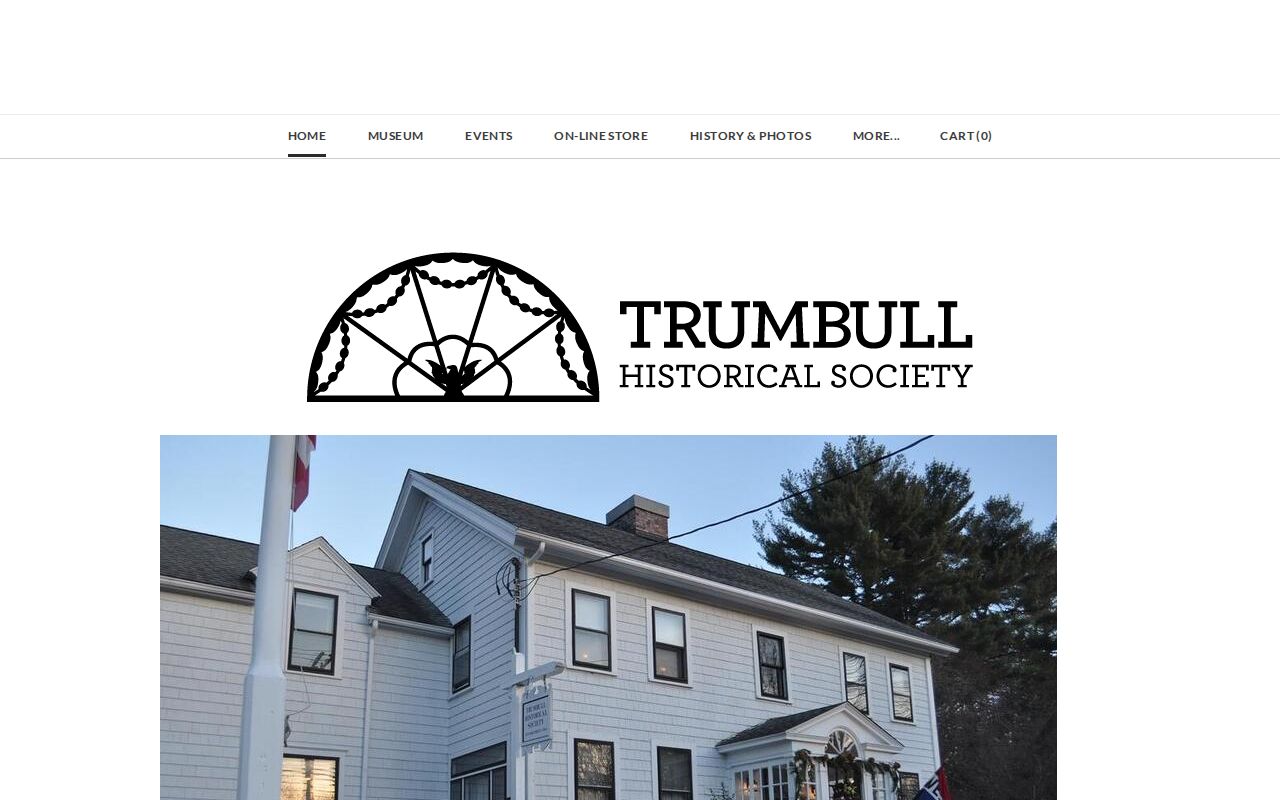
The Society's museum and research library at 1856 Huntington Turnpike is by appointment, and its property histories add context that a telephone listing cannot provide.
The Woods Estate in Trumbull
The Woods Estate is a useful local story because it shows how a property history can outlast any one directory edition. The Historical Society traces the place from the Nichols family through George and Florence Woods, then to Nichols Methodist Church, the Town's 1974 acquisition, and the Society's 1978 lease. That sequence belongs to a property and institution, not to a current private occupant.
For a named house, combine the Society's chronology with the assessor card, recorded instruments, permit or street-card history, local-history collection, and church or cemetery evidence. A historical building story can explain a place name or former owner while still leaving current residence to the custodian that holds a current record.
The official house-history page gives the chronology:
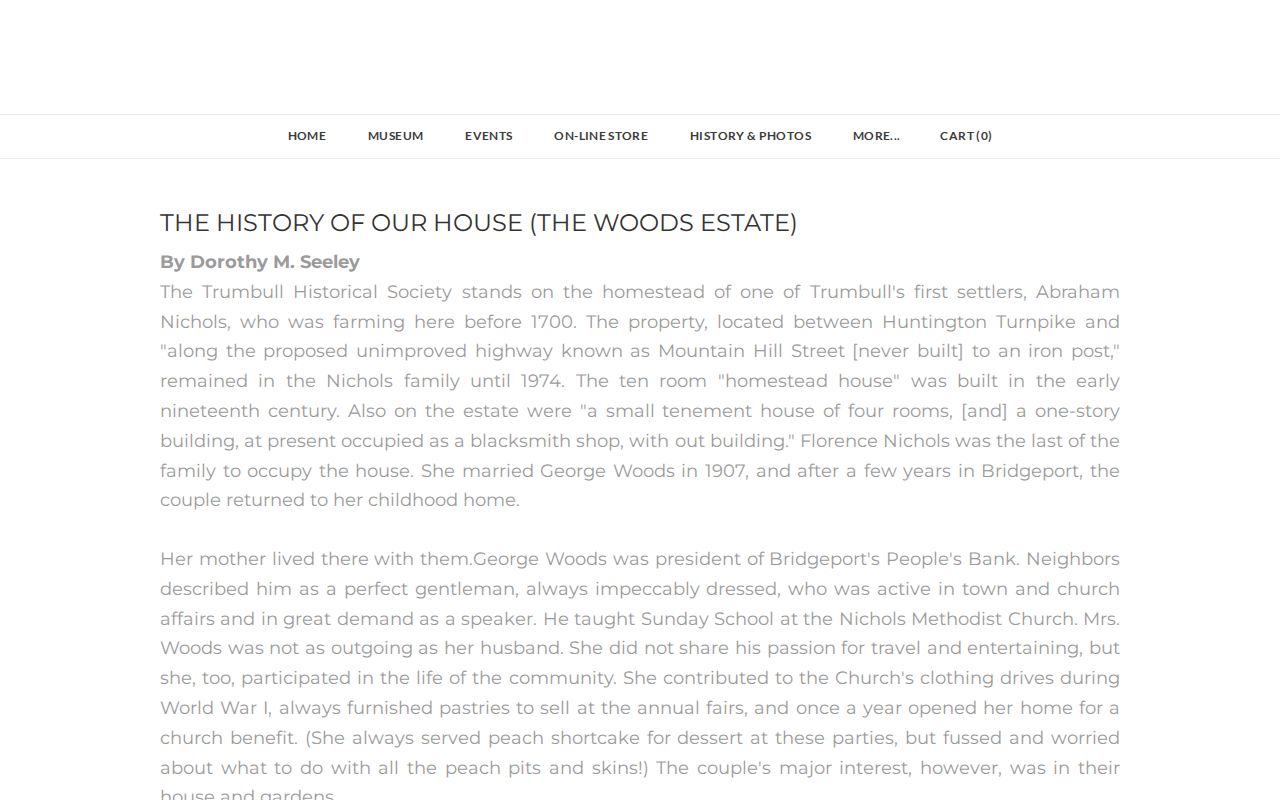
It is a model for documenting a house without turning a historical name into a present-day address claim.
Trumbull Churches and Cemeteries
The Connecticut State Library guide supplies church and burial context that can sit beside a city directory. Located runs include Christ Church Tashua from 1787 to 1923, Church of Christ from 1730 to 1937, an early births, baptisms, and marriages transcript from 1731 to 1808, and Grace Church from 1829 to 1945. Hale's Fairfield list identifies nine Trumbull cemeteries, while the town historical-resource entry identifies Christ Episcopal Church and Tashua Burial Ground, dated 1766 with 241 plots and a National Register listing from 2001.
No official municipal interment lookup or Trumbull-specific obituary index was confirmed. Search the State Library, library catalog, Historical Society, Connecticut Digital Archive, and cemetery transcription before relying on a secondary name index. Treat an inscription, a transcription, a church register, an obituary, and a certified civil copy as different evidence.
Those sources are often the endpoint for a directory trail when a subscriber disappears from later books.
Trumbull Digital History Sources
Connecticut Digital Archive is a discovery route for photographs, documents, maps, local collections, and descriptive metadata. Search Trumbull, North Stratford, Nichols, Tashua, Long Hill, Unity, Main Street, Huntington Turnpike, and institution names. A catalog record establishes provenance and date, but it may describe an image rather than expose a name index.
FamilySearch and the Connecticut State Library catalog are especially useful for Trumbull land, church, probate, vital, and cemetery material. A catalog entry does not guarantee an open image. The Library of Congress telephone books are stronger when a dated subscriber page is needed because the scan and OCR are available together. Save the collection title, item URL, page or sheet, date, search terms, and any rights note. For built-environment context, the Library of Congress Sanborn search guide explains coverage limits, and the regional Bridgeport Sanborn item should be treated as regional rather than a Trumbull map.
For a useful archive note, write down whether the name came from a white-page subscriber list, a classified heading, an additional listing, an index, or OCR. Those labels answer different questions. An index can point to a page without proving that the scan is complete, while OCR can misread a surname or a street number. Compare the image with the text, then keep the book date and page beside the transcription.
When Trumbull Directories Stop
A city directory stops where its publication, locality, listing, or access stops. The confirmed regional books omit unlisted subscribers, households without telephone service, some businesses, and periods between editions. A local reverse or criss-cross run has not been confirmed on the official library page. A missing obituary or newspaper result is also a research gap, not proof that no record exists.
Use the next custodian in the chain. Ask the library or Historical Society for a shelf or appointment, the State Library or FamilySearch catalog for filmed material, the Town Clerk for a deed or certified vital route, the court or probate clerk for a case, and the assessor or GIS office for a current parcel check. Record what was searched and what remains unknown.