
Trumbull Resident Lookup Sources
There is no single Trumbull resident lookup that joins every record. The right source depends on what needs to be verified. Vision is a municipal parcel tool. The voter lookup is a registration and polling service with privacy rules. The Judicial Branch provides public case indexes, while probate has a separate district filter. Town Clerk and DPH routes handle vital copies. SOTS and DCP expose business or credential fields.
| Record | What It Confirms | Where | Access |
|---|---|---|---|
| Assessor parcel | Owner field, situs, mailing line, PID, values, sale pointer | Vision Trumbull | Public web |
| Voter registration | Registration or polling information when matched | SOTS lookup | Name, town, DOB; privacy limits |
| Civil case index | Party, docket, category, dates, filings and events | Judicial Branch | Public index; documents vary |
| Criminal/MV docket | Pending, daily, or disposition search clues | Judicial Branch dockets | Current record route |
| Probate | Estate or trust case number, type, district, status | Probate lookup | Public index; documents separate |
| Vital record | Birth, death, or marriage event when eligible | Town Clerk / DPH | ID, relationship, fee, form |
| Business or license | Entity role, credential type, status, public address | SOTS / DCP | Official state lookup |
A result is a lead until the role, date, and second identifier agree. An owner is not automatically an occupant, a court party is not automatically convicted, and a licensee is not automatically a business owner.
Naming the Right Trumbull Person
Start with the exact surname and first name, then test middle initials, maiden or married names, business roles, historic spelling, and locality terms such as Nichols, Long Hill, Tashua, Trumbull Center, and North Stratford. The same name can appear in a parcel card, docket, probate case, directory, and license file without representing the same person.
Use a second identifier early. A Trumbull address, PID, MBLU, ACT NUMBER, docket number, Business ID or ALEI, credential number, probate district, death date, or directory year narrows a match. Write the search terms and date down. Each system indexes names differently, and a partial result can look stronger than it is.
- Index versus image
- An index points to a record; the full image or certified copy may require another request.
- Owner of record
- The party shown in a municipal assessment field, not proof of who occupies a parcel.
- Docket
- The court's identifier for a case and its filings, events, and disposition.
- Certified copy
- A custodian-issued copy with an official certification, distinct from a web result or scan.
Trumbull Civil Search Fields
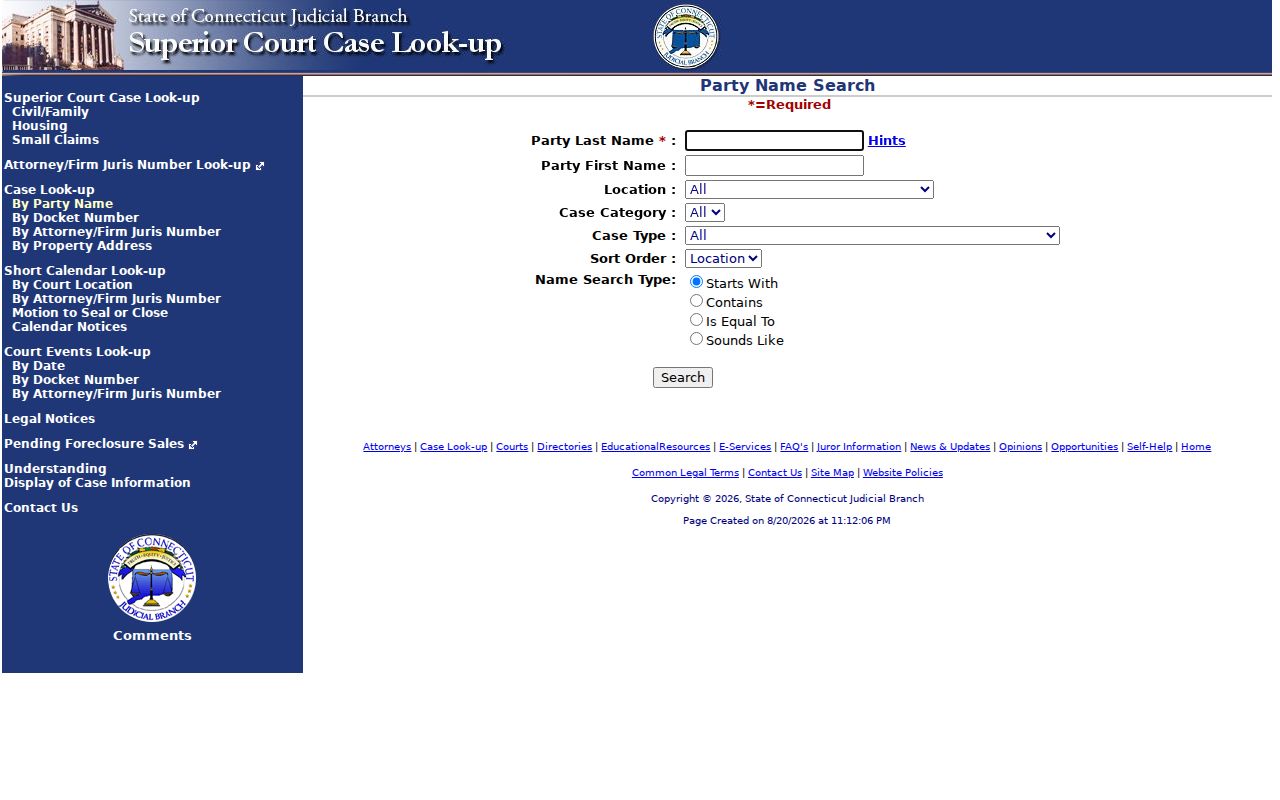
The Connecticut Judicial Branch Civil Inquiry party screen is a useful name-search model. Last name is required. First name, location, case category, case type, sort order, and name-search choices are optional controls. The choices include Starts With, Contains, Is Equal To, and Sounds Like. The public display guide identifies case name, type, docket number, file and return dates, court location, last action, disposition, party category, attorney or self-represented status, motions, pleadings, and scheduled events.
Search with a complete surname first, then narrow by location or category. A case name can contain several parties, organizations, or similar names. Scheduled events update on the system's stated cycle, and online information should be checked with the court. Sealed, juvenile, VAWA-protected, and other restricted matters are not assumed to appear.
The official party-search route is shown here:
Save the party role, docket, court location, file date, and disposition rather than copying a name without context.
Trumbull Criminal and Motor Dockets
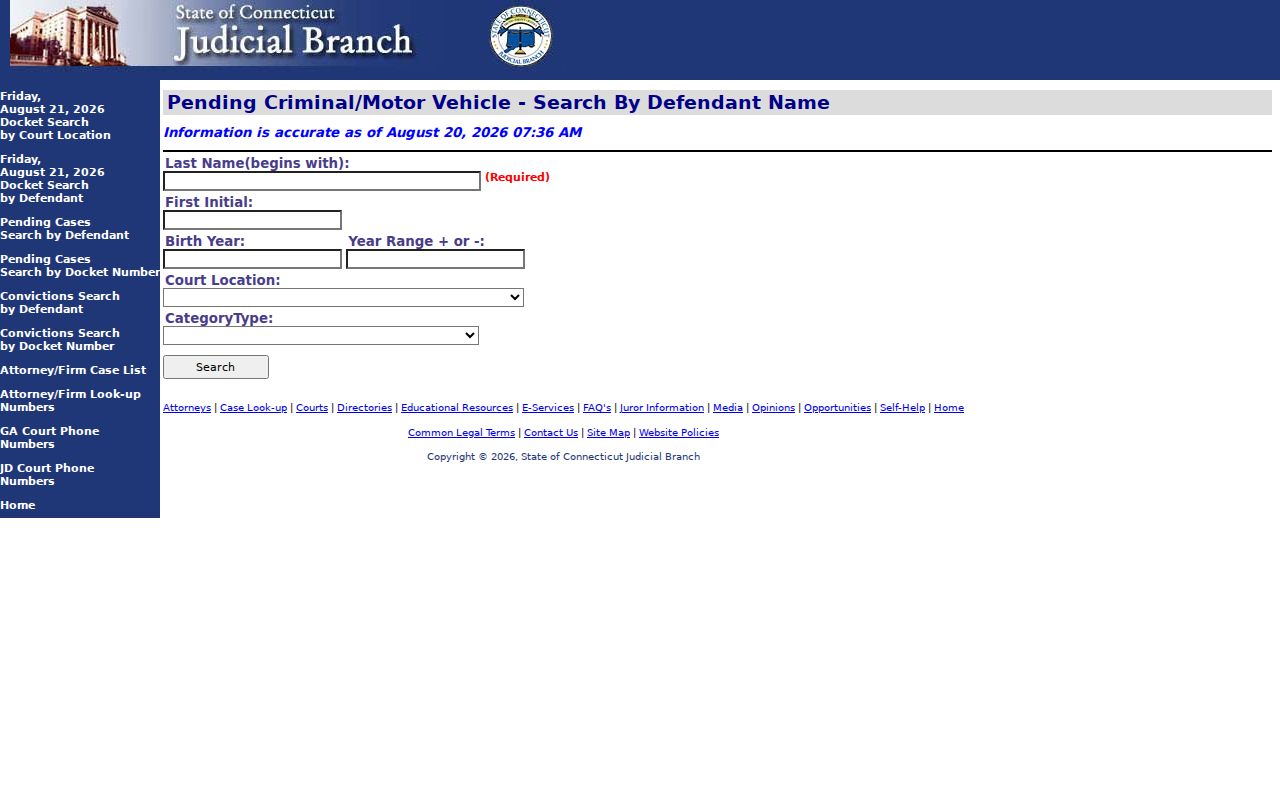
Criminal and motor-vehicle searches are separate from Civil Inquiry. The criminal and motor-vehicle docket hub leads to pending and disposition routes. The pending-defendant form uses last name, first initial, birth year, a plus-or-minus year range, court location, and category. Disposition searches use surname, initial, year, court, and Criminal or Motor Vehicle categories. The page can be current or date-sensitive, so preserve the “accurate as of” information when it appears. For federal matters, the Bureau of Prisons locator is a separate federal custody route covering 1982 forward.
A pending entry is not a conviction. Check the court, docket, birth year, category, date, and disposition. Do not turn a daily docket into a complete criminal history. The local Trumbull Police Records route is separate again and has its own report timing, release, fee, and redaction rules.
The defendant search fields are captured at the official state route:
Use the court clerk when an index result needs a complete or certified file.
Trumbull Probate and Vital Paths
Probate District 46 covers modern Trumbull estate and trust index work. The public lookup covers January 5, 2011 to the present and returns case number, names, type, district, and status choices. Older Trumbull estates may be found under the Stratford District from October 1787 to June 1840, the Bridgeport District from June 1840 to January 6, 1959, or Trumbull's district from January 7, 1959 onward. A case index does not open every document.
For a birth parent or adoption-related question, ordinary vital lookup is not the right route. Connecticut DCF's adult adoption-record route and Reunion Registry use identity checks, notarized forms, non-identifying information rules, and mutual consent. For an heir, combine the probate case number with authorized documents, a death record, obituary, deed, or estate transfer. A probate name is not a current address.
Trumbull Vital Eligibility
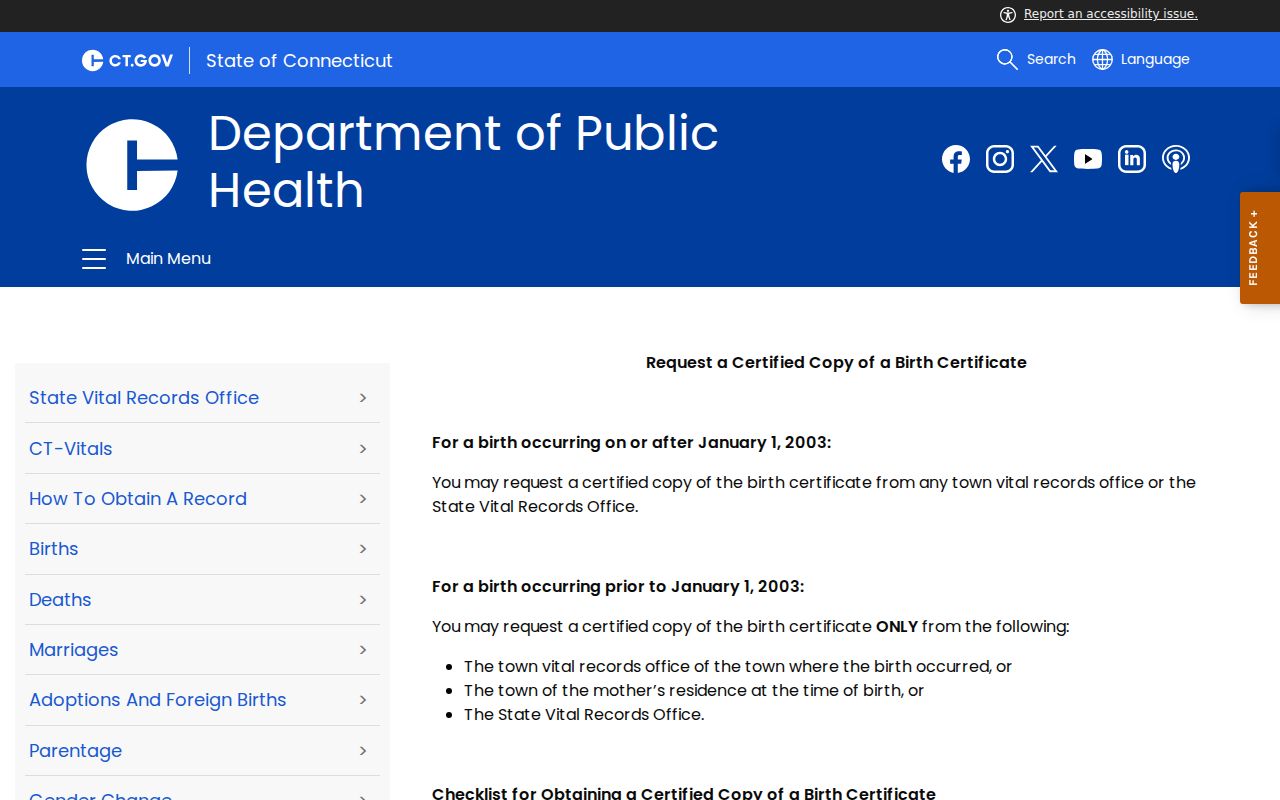
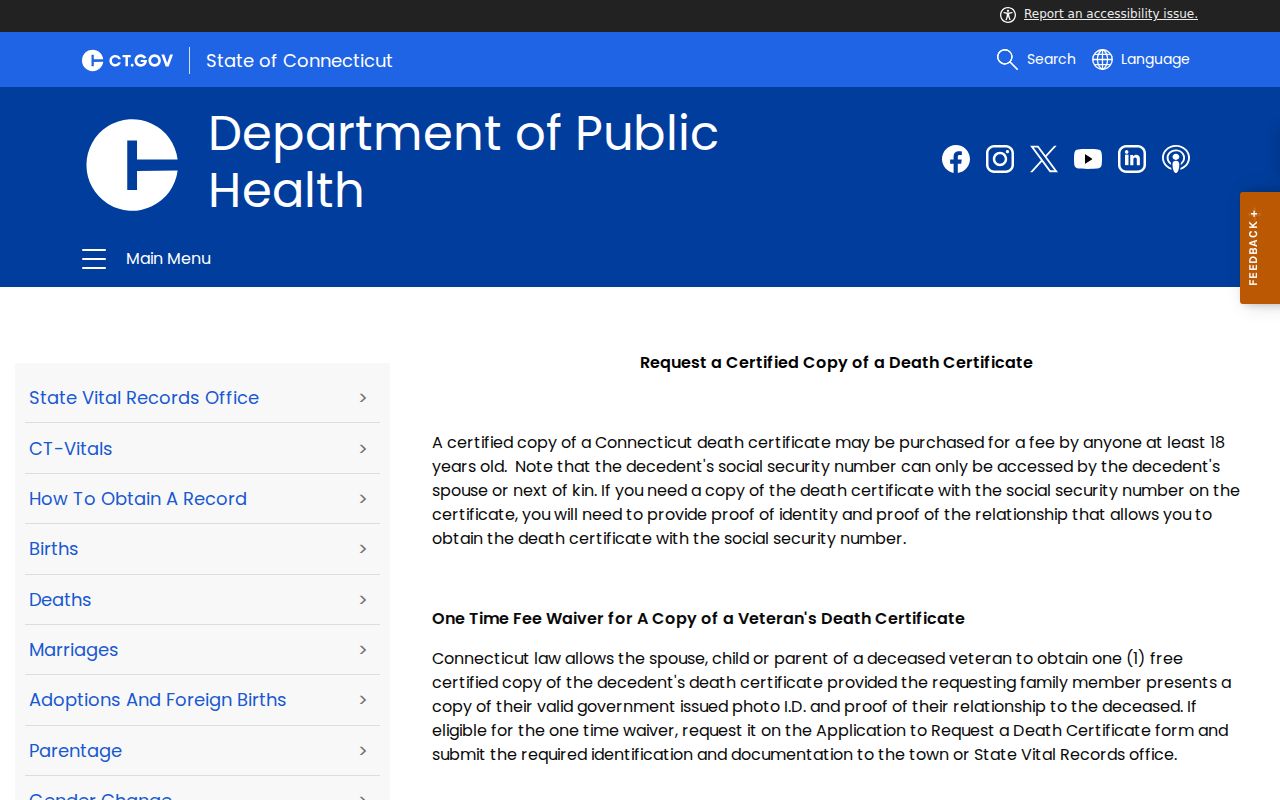
Trumbull Town Clerk provides local certified copies, and DPH provides statewide routes for Connecticut events. Birth records younger than 100 years are restricted to listed registrants, relatives, guardians, authorized representatives, and other stated categories. Births at least 100 years old are public under the genealogical rule. Death records can be requested by an adult, but Social Security and veteran-copy details have special limits. Marriage copies are generally available to adults, with Social Security numbers protected.
Forms ask for the event subject, date and town, parent or spouse information when relevant, requester identity and contact, relationship or reason, copy type, ID, proof, signature, and payment. Trumbull's listed full-size birth copy is $20. DPH state routes list different fees and can take up to 12 weeks. Mail, in-person, and approved online routes vary by record.
The DPH birth instructions show the eligibility and ordering controls:
Death records have their own access page and fields:
Use the Town Clerk or DPH form that matches the event instead of assuming a general name search can supply a certified copy.
Trumbull Business and License Records
A public business or credential file can help verify a role connected to Trumbull. Secretary of the State searches can use business name, Business ID or ALEI, filing number, city, principal, or agent. The SOTS results guidance describes entity type, formation date, principal, agent, street, city, state, ZIP, annual report, filing number, and name history. A filing role is not proof of current activity or private residence.
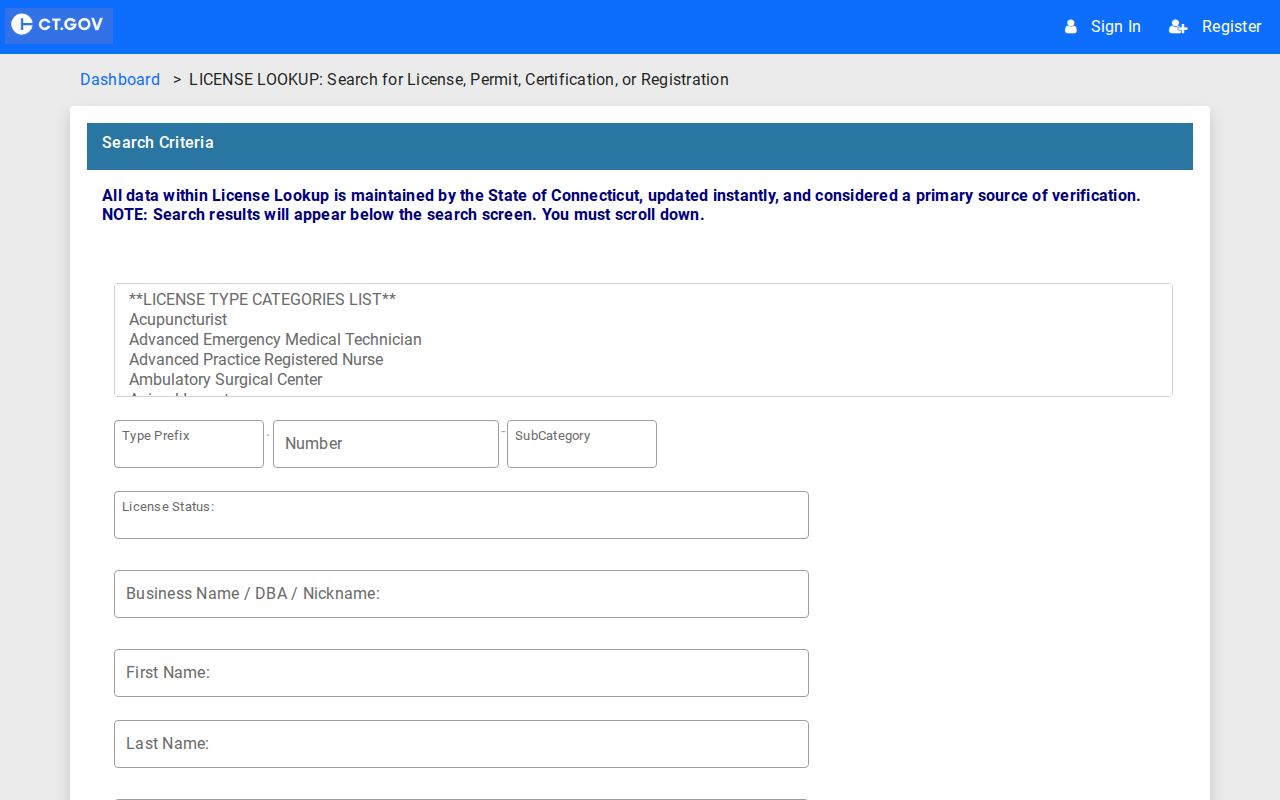
DCP eLicense is a real-time public lookup with fields for license type, prefix, number, status, business or DBA, first and last name, city, state, ZIP, and country. Results can show credential number and type, effective and expiration dates, scope, and supervisor where applicable. Use one or two strong fields and save the date. Local Trumbull trade names remain a Town Clerk route, with a posted $23 fee and no separate public online index found.
The ZIP-capable credential screen is visible here:
When an entity or license result is wrong, contact SOTS or DCP, not a different records custodian.
Verifying a Trumbull Resident
Verification means comparing independent records that describe the same time and role. An assessor card can anchor a name to an owner field and a parcel. A court index can confirm a docket and party role. A vital record can establish an eligible event. A business or license record can establish a public filing or credential. A historic directory can show a past subscriber. The sources should agree on more than a name.
- Normalize the name, including initials, alternate spelling, maiden or married name, and business role.
- Choose one place or date anchor, such as a Trumbull address, PID, court location, probate district, event date, or directory year.
- Run the narrow official portal and save the complete result fields, not just the first name line.
- Check a separate custodian. For example, compare a Vision parcel with a deed pointer, or a civil party with the docket date and court.
- Contact the creator of the record when a correction, certified copy, or protected-field question remains.
| Result field | What it helps establish |
|---|---|
| PID, MBLU, or ACT | Which municipal parcel the assessor card describes. |
| Docket and court | Which case and court location the party entry belongs to. |
| Case number and district | Which probate file route should be requested. |
| Business ID or credential number | Which entity or license record should be checked again. |
| Record date and source URL | When the fact was visible and where the custodian publishes it. |
A result can be accurate yet answer a different question. Keep “owner,” “party,” “registrant,” “licensee,” “subscriber,” and “occupant” as separate labels. For an heir-search side route, Connecticut's official unclaimed-property search is free, but a name match still requires the Treasurer's claim process.
Trumbull Safety and Privacy Limits
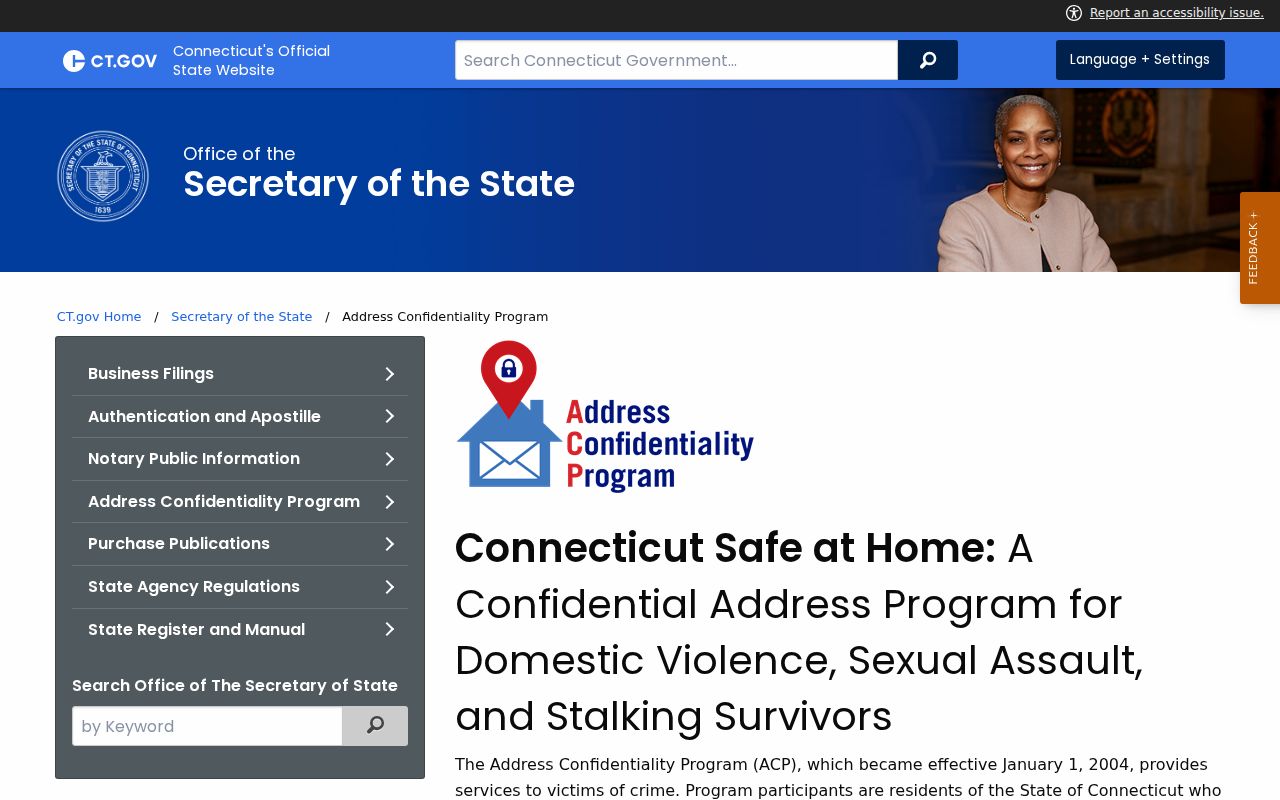
Connecticut's Safe at Home program supplies a substitute address for eligible safety-risk participants. The Secretary of the State's voter privacy and CVRS page explains address suppression and public-release limits. Voter privacy and C.G.S. §1-217 can suppress residential address information. DMV personal data, under-100 births, adoption files, protected Social Security fields, sealed or juvenile cases, VAWA-protected records, and restricted probate documents are not ordinary open search results.
A no-match may mean privacy protection, administrative timing, spelling, nonregistration, or a different custodian. The Secretary of the State's 2026 voter-list Q&A explains why protected voter fields are not released. Do not use another source to defeat a redaction or substitute address. When a public record is wrong, ask the office that created it: Assessor, Town Clerk, SOTS, DCP, DPH, court clerk, or elections office.
Safe at Home explains the protected-address route:
Personal, lawful research can support genealogy, family reconnection, estate questions, and civic checks. It must not become stalking, harassment, intimidation, or harm.
Lawful use. A Trumbull resident lookup is a source-checking task, not permission to build a private dossier or contact someone who has signaled that contact is not wanted.